
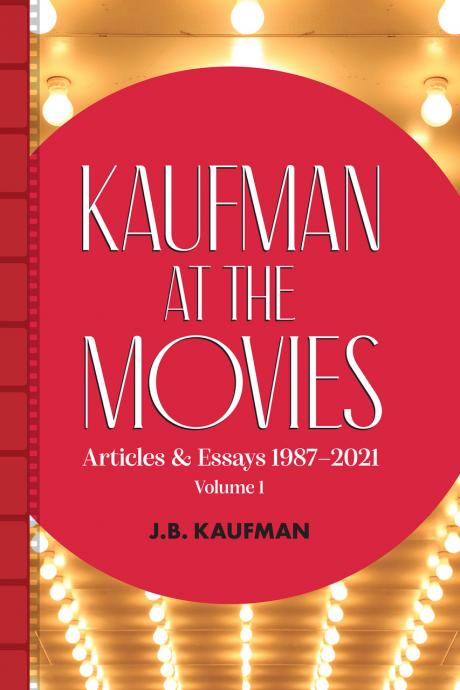
Alongside his full-length books, J.B. Kaufman has been writing articles, essays, festival program notes, and other short-form pieces since 1987. Most of those short pieces are long out of print. Now the best of them, and some new ones, are collected in a two-volume anthology. This first volume focuses on stories from the classic years of Disney animation, based on decades of archival research and interviews with the original artists. Some of these articles are substantially updated and expanded from their originally published versions.
Chapters
Merbabies: The Disney Film that Wasn’t
[first published 1987]
The making of Merbabies (1938), a Walt Disney Silly Symphony that was actually produced outside the Disney studio. In a unique historical circumstance, Walt farmed out the production of this short to the Harman-Ising studio.
Before Snow White
[first published 1993]
Years before the historic opening of Snow White and the Seven Dwarfs in 1937, moviegoers could see Disney animation in features produced by other studios. This article traces the history of these Disney “guest” scenes in features of the early and mid-1930s.
The Transcontinental Making of The Barn Dance
[first published 1997]
The first three Mickey Mouse cartoons are duly celebrated in popular culture, but the fourth, The Barn Dance (1929), has a special distinction. Walt, in New York, directed the artists in California by mail! His letters, preserved today, take us behind the scenes of this important short.
Tanglefoot 3.0
[published 1998 (first version), 2011 (second version)]
During the 1930s, Tanglefoot the horse became a recognized Disney character via his appearances in comic strips and storybooks—but never once appeared on the screen. This article traces his life story.
A Couple of Goofs
[not previously published]
A close look at two Goofy cartoons, Goofy’s Glider (1940) and Baggage Buster (1941). Produced by a director and an animator of sharply differing temperaments, these two shorts present a beloved Disney character in an unfamiliar light that has always been overlooked.
The Heir Apparent
[first published 2011]
Mickey Mouse’s sensational success story in the 1930s had far-reaching effects: not only did he become the greatest cartoon character of them all, he was also the “heir apparent” of the American comedy tradition. An in-depth exploration of the links between Mickey and the great live-action comics, comparing their treatments of common themes and gags.
