

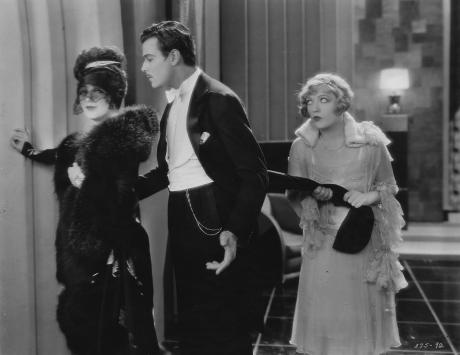
Cosmopolitan/MGM, 1928. Director: Robert Z. Leonard. Scenario: F. Hugh Herbert, adapted by Carey Wilson from a play by Jacques Deval. Camera: John Arnold. Film editor: Basil Wrangell. Cast: Marion Davies, Nils Asther, Jetta Goudal, Andres De Segurola, Tenen Holtz, Pepe Lederer.
Regular readers of this column will know that I like to highlight the work of small, independent DVD/Blu-Ray labels that bring formerly “lost” films back to life. One outstanding example is Undercrank Productions, the brainchild of the multitalented Ben Model. Ben initially made his mark as a silent-film accompanist, but has since branched out in additional directions, working with the Library of Congress and other archives to rescue key silents from extinction. The restored films are then released to home viewers on high-quality Undercrank discs, accompanied by Ben’s original musical scores. Several of these releases in the past have featured the silent-film output of Marion Davies, and this month Undercrank is unveiling an important addition to the Davies library: The Cardboard Lover.
It’s a pleasure to report that this film, newly restored to view after being hidden for decades, is well worth the wait. Today, much of Marion Davies’ reputation rests on the two silents she made in 1928 with director King Vidor: The Patsy and Show People. Both films are undeniable classics, combining Vidor’s directorial strength with Davies’ unleashed comedic skills. But history has conveniently overlooked her other 1928 vehicle: The Cardboard Lover, directed by Robert Z. Leonard and released between the two Vidor pictures. Long hidden in their shadows, it now emerges as a delightful comic outing in its own right.
I yield to no one in my admiration for King Vidor; he’s one of our great directors, responsible for some of the all-time cinematic classics. But Leonard was no slouch either: a reliable MGM house director for decades, with a track record of his own, encompassing some of the studio’s most prestigious hits across a variety of genres. In The Cardboard Lover he establishes a light, brisk pace from the outset, giving Marion Davies ample space to deliver her comic performance. The story, too, is well suited to her talents: she appears as a gauche American student, taking part in a group tour of France. Through a combination of circumstances, she blunders into the middle of a volatile romantic affair between a dashing international tennis star (Nils Asther) and his glamorous lover (Jetta Goudal). Davies soon sets her own sights on Asther, and her awkward pursuit of him affords an opportunity for rich comic set-pieces. One of the highlights of The Patsy had been a sequence in which Davies performed uncannily convincing impressions of Lillian Gish, Pola Negri, and Mae Murray. Here she takes a kind of encore, an extended imitation of Jetta Goudal, again with devastating accuracy.
Along with her performance, the performance of leading man Nils Asther is worth noting. Asther was enjoying a vogue of his own during these years, one that extended well into the sound era. Today’s film enthusiast may be familiar with the darkly exotic presence he projected in such films as Laugh, Clown, Laugh, The Single Standard, or the recently restored Letty Lynton. But his performance in The Cardboard Lover offers a disarming variation: after establishing his expected matinee-idol persona in the early scenes, Asther lets himself be drawn into the comic proceedings and submits to the spirit of the film. His willingness to relax and poke fun at himself, kidding his own image, is refreshing and adds to the film’s entertainment value.
Another notable cast member is Andres De Segurola, an operatic bass singer originally from Spain. By 1928 De Segurola had already logged a full career on the operatic stage,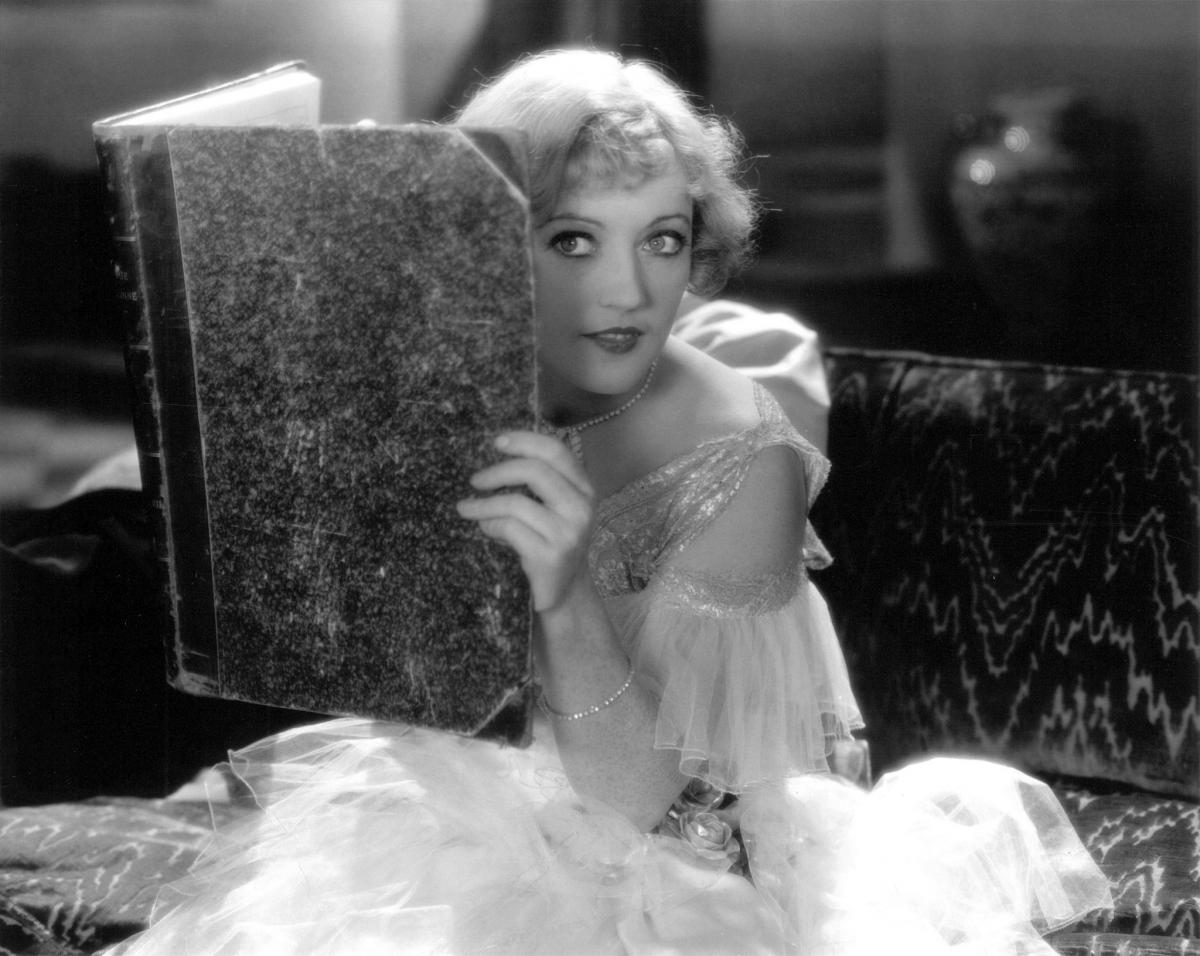 including nearly 20 years with the Metropolitan Opera. In the late silent era he embarked on a second career in the movies, a pursuit that continued into the 1930s and brought him numerous roles in Spanish-language films produced in Hollywood. What sets apart his appearance in The Cardboard Lover is that he plays himself—Andres De Segurola, the famous opera singer (identified here as a baritone), who likewise gets caught up in the amorous goings-on and submits to some physical sight-gag comedy.
A key chapter in Marion Davies’ career, a sparkling specimen of silent comedy, simply one more “lost” silent recovered for posterity—from any perspective,The Cardboard Lover is a genuine find. Part of this success story is the reconstruction itself. The team started by scanning a 35mm print at the Library of Congress, itself copied in the early 1970s from a nitrate print that was already suffering significant decomposition. They proceeded to perform a near-miraculous digital restoration of the affected areas (one of the bonus features of the disc is a side-by-side comparison reel, demonstrating the astonishing restoration of image quality), then supplemented that with additional 35mm fragments from archives in Britain and France. The result is a near-flawless gem of film history, restored to our view. Once again, we owe Ben Model and his colleagues a vote of thanks for this gift.
