

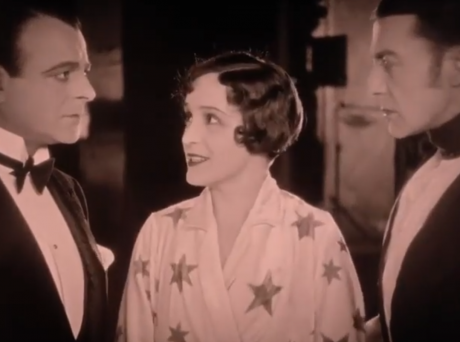
Paramount, 1926. Director: William Wellman. Scenario: Benjamin Glazer, based on a story by Ernest Vajda. Camera: Victor Milner. Cast: Florence Vidor, Lowell Sherman, Clive Brook, El Brendel, Roy Stewart, Joe Bonomo, Irma Kornelia, Sidney Bracy.
In my effort to explore obscure or little-known films in this column, I’m often in the position of reviewing previously “lost” films that have been rediscovered or belatedly restored. Happily, there have been many such rescues in recent years, and it’s a joy to celebrate the sometimes miraculous efforts of today’s film-preservation community. But not all rediscoveries are films that have been physically saved from oblivion. Sometimes they’re lower-profile cinematic gems, fully extant but hiding in plain sight, simply overshadowed by more widely-known movies.
William Wellman is a director who needs no introduction to the film enthusiast. Many of us, myself included, have long celebrated his pre-Code films at Warner Bros., where he was one of the studio’s toughest, most uncompromising directors. But of course Wellman’s pre-Code period was only one part of a film career that spanned four decades and offered many other highlights. His work in the silent period is forever linked with Wings, the spectacular aviation drama of World War I that broke new ground in action films and is still as exciting and entertaining as it was in 1927.
But immediately before Wings—and, reportedly, the film that won Wellman the opportunity to direct a big-budget spectacle like Wings—was another, much smaller-scale film that was quietly wonderful in its own way. You Never Know Women is, at its heart, a conventional drama of the eternal triangle, but it’s brimming with cinematic style. At the apex of the triangle is Florence Vidor, an actress who is underappreciated today but was a reliably elegant and versatile leading lady throughout the silent period. Here she’s cast as a leading performer in a Russian circus/vaudeville troupe on an American tour, an offbeat plot situation that lends the film an added exotic flavor. She is loved, none too secretly, by her costar, fellow performer and magician Clive Brook. Into their relationship comes an outsider, Lowell Sherman. Many film enthusiasts know Sherman best as the seducer who had turned his oily attentions on Lillian Gish in Griffith’s Way Down East; here he is still practicing the same specialty. One look at Florence Vidor, and Sherman’s campaign of conquest is under way.
Along with the three principals, the cast includes other names of note. Roy Stewart was and is known primarily as a cowboy star of the silent era, but in fact divided his time between Western and non-Western pictures. Here he’s inconspicuous as a member of the vaudeville troupe.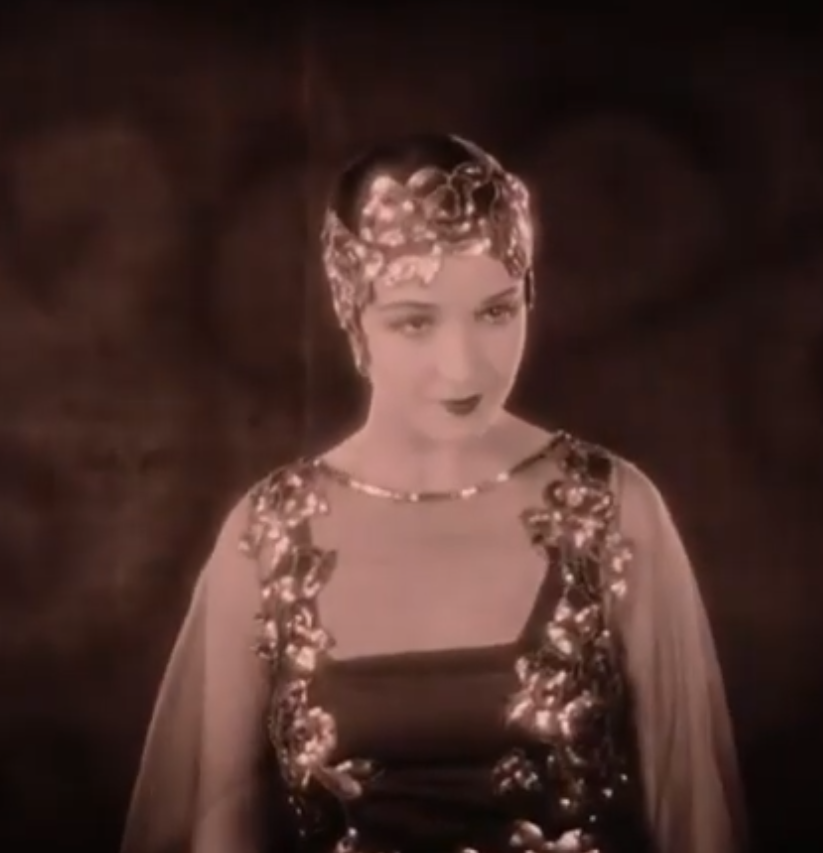 Eugene Pallette had, by 1926, essentially completed the transition from his romantic-lead status in Intolerance to the rotund character player we remember from the 1930s and ’40s, missing only the distinctive gravelly voice that would be revealed in the sound era. Sidney Bracy is cast against type in this film, appearing as the volatile, fast-talking manager of the troupe before reverting to the tight-lipped butlers and valets that he played in dozens of other movies.
No discussion of You Never Know Women would be complete without mentioning the outstanding work of cameraman Victor Milner. By 1926 Milner was a veteran of more than a decade’s standing, having worked both in Hollywood studios and in dangerous conditions in the field. The late silent period in America, sometimes called the time of “high silents,” was notable for a spectacular flowering of technique, as if the silent cinema was anxious to show off the immense visual sophistication it had achieved before being overtaken by the talkies. This concentration on visual technique often put heavy demands on the cameramen, and Milner was up to the challenge. You Never Know Women is filled to overflowing with eye-catching pictorial touches: artfully masked frames, a “ghostly” superimposition of a departed lover, graceful compositions of light and shadow worthy of a Tourneur or Sternberg film. One of the hallmarks of the “high silents” was a heavy use of the moving camera, a carryover from contemporary German cinema. Wellman would later disavow the use of the moving camera, but in this film he embraced it eagerly, and Milner delivered the goods. His camera is all over the place: gliding before a walking figure in smooth dolly shots, roaming over a busy display of acrobatics in the stage show, soaring over the heads of the theater audience, racing through traffic on the hood of a speeding taxi.
This profusion of pictorial riches comes to a head at film’s end. For the benefit of those who have not seen the film, I will not describe the plot, but I can say that Wellman and Milner team up in the last reel for an all-out bravura exhibition of technique. The climactic sequence teems with ominous, brooding shadows, half-hidden figures just visible within the frame, and a succession of suspenseful twists, including a chase through a darkened theater. It’s a concentrated dose of pure cinema. Anyone who loves film will benefit from a screening of You Never Know Women; Wellman’s biographer, Frank Thompson, has described it as “very nearly a masterpiece.” The Kino Blu-Ray, sadly, appears to be out of print, but the viewer lucky enough to find it will enjoy a 4K scan from an excellent tinted 35mm print, with the added benefit of a splendid musical score by Donald Sosin.
